Showing posts with label newbery. Show all posts

Monday, January 23, 2012

Newbery: What I Said Before They Won

It's incredibly difficult to review Newbery winners and honors in an objective way after you KNOW they've won. Sometimes you feel stupid about what you said earlier, after you found out they won. (Though I don't take the attitude that I was "wrong" about a book based on its win; I just figure "well, we like different stuff, then".)

I'm going to own what I said earlier. I don't know if I would do it if I didn't like what I'd said, though. These are from my Goodreads reviews and comments on Heavy Medal.

Honor, Inside Out and Back Again:

(three stars) I find it difficult to review this, just like I found it difficult to review the last novel-in-verse about a Vietnamese refugee in the 1970s that I read, All the Broken Pieces. Like anything negative I might say is me judging the immigrant experience itself. At first I didn't like this that much, but it's growing on me some after the fact. Ha reads like a more original character than many, and the thoroughly-sketched mother and sketchily-sketched brothers are all so clear to me in my mind. One heartbreaking sentence at the very end made me feel that Brother Khoi has his own fascinating book in a parallel universe. The sense of place is much greater for the scenes in and memories of Vietnam than they are for Alabama. Overall: good, but not great. I don't think it's a Newbery.

******************
Hmm. While Inside Out and Back Again isn’t one of my top choices, nor is it one of my favorite novels in verse (a small group; I react to these with distrust and they have to win me over), I don’t find the line breaks ineffective. They feel a little more daring, innovative, than what you quote from Eddie’s War (which I haven’t read). And the style also evokes to me (I hope I can say this without sounding horribly racist) both the harshness of life depicted in the book, and the rhythm/sound/feel of what spoken Vietnamese sounds like to someone who doesn’t understand it. [ETA: I should have said "what it sounds like to me as a nonspeaker"] I felt like it added to my perception of the mother, in particular, as a living breathing character.

Honor, Breaking Stalin's Nose:

(four stars) An intriguing little book, certainly a perspective I have not read before (devoutly Communist child). Does not waste any words or any time. The ending is pretty ambiguous and I'm not convinced it will work for young readers. I don't know enough about Stalin and Communist Russia to know how much of this is realistic and how much might be propaganda. Pulls no punches.

Winner, Dead End in Norvelt:

(three stars) I got impatient with this about halfway through. Occasional moments of clever brilliance, but Newbery-wise, I can't see this standing out in a field that includes Okay For Now. Also, the punk kid with quirky elderly neighbor plot ought to be locked in the vault for the next ten years or so.

***********
I finished Dead End in Norvelt last night. I thought there was a great sense of setting–I was interested enough to read the Wikipedia article on the town, and as I read I could picture the town I’d imagined from the book very clearly. But I agree on the plot getting lost, and I’m also iffy about most of the characters. I’m not sure whether this is intentional or not, though. Jack is a fully-realized character; Miss Volker comes close; but everyone else felt pretty muddled to me. Mrs. Gantos, in particular, I couldn’t get a handle on. I didn’t understand her or her relationship with Jack, and certainly not her relationship with her husband. But since so much of the book takes place in Jack’s head, maybe we’re seeing all the characters through his eyes without nuance. I could sort of support that.

It irritated me that there are a couple of references to Girl Scouts selling cookies to make money for themselves/their families. That’s one of those small things that shouldn’t matter and probably only matters to people with specialized Girl Scout knowledge, right? It’s a much smaller point than the Eagle Scout inaccuracies that actually affected the plot of Mockingbird last year.

Miss Volker felt like the secondary character equivalent of a Mary Sue. She always seemed to have the precise 21st-century liberal view of every issue. The teasing Harold-and-Maudey jokes about Jack being her boyfriend that people kept making did not ring true to me as being things people would really say, especially not the boy himself.

I did think there were moments of comedic brilliance. My favorite scene was the initial one with Miss Volker cooking her hands. I’m unfamiliar with Gantos’s work, so I can’t compare this to my reaction to his humor in general.

****************
The books have a lot of similarities and it’s unfortunate that they came out in the same year; I said in my Goodreads review that I didn’t think Norvelt would get attention in Okay For Now’s year. Yet looking back on both books, after not having looked at either in quite some time, it seems like Norvelt is the more daring, risky book; Okay For Now is easier to like. It may actually be better (as was my first impression) or it may just be more comfortable.

Sunday, January 8, 2012

The Newbery is Coming

It is possible that I have completed my pre-Newbery reading for the season, with sixty books.

Sixty! That's almost as many as I had to read in order to read all the winners in the first place. I have a better-funded library system here, so I was able to read almost twice as many contenders as I was last year. (The two years before that I didn't keep track in the same way.)

Yet still, I have the nagging feeling that I'm missing something. Even though every year I've already read most of the books that get make the podium, and this year I've read so much more. I think there are always the books that don't get attention from any of the attention-makers that the committee has ferreted out. And, of course, sometimes the ways of the committee are mysterious.

My ideal Newbery results are when I have read everything on the podium except one book; it gives me a good feeling of satisfaction, but I still have something exciting to read. (Last year it was Moon Over Manifest, which I did have out of the library to read next; it hadn't escaped my notice. In 2010 it was Homer P. Figg, which I admit I still haven't read because the cover is so wildly unappealing to me. In 2009 I hadn't read The Graveyard Book, because we didn't think it was eligible, or The Surrender Tree, which would have been my own frontrunner if I'd read it.)

I don't feel invested in the results this year. There are so many books that are considered frontrunners that I don't think are good enough that none of them even particularly stand out as "ANYTHING BUT THAT". There are a lot of books that I think are pretty good. Most of all, I think the theme of this year for me is the number of books that I really enjoyed but don't think will win. They're books for readers, regardless of award podiums. Books like One Day and One Amazing Morning
on Orange Street, and Jefferson's Sons, and The Great Wall of Lucy Wu, and Akata Witch, and Icefall.

You can see my list of everything I read that has been mentioned as a possibility for the Newbery somewhere here. (You'll see only 57 books. I count 60, but I didn't include any of the three Mo Willems books that have been suggested as possibilities. I can't bring myself to believe that these books' Newbery chances are anything but manufactured by the blogosphere.)

And the Goodreads poll for Newbery winners always makes for interesting reading. I've read 50 of the 69 listed there as of today.

There are still a few books I would like to read--Wildwood, Blizzard of Glass, The Freedom Maze, Eddie's War--but looking at the hold list, I'm unlikely to get to read them before the ALA Youth Media Awards on January 23.

As soon as they're over, I'm going to read NOTHING but adult non-fiction for a solid month.


Saturday, November 12, 2011

Reading Broadly

I keep a list on Goodreads of "award possibilities" each year. It's mostly Newbery; this year it's pretty much all Newbery. (I did not love them all. They're just part of the discussion.) Here are the titles on my list with authors and/or protagonists who I know to be people of color, plus a few that are still on my shelf, waiting to be read.

Hidden, Helen Frost
Drawing From Memory, Allen Say
Can I See Your ID? True Stories of False Identities, Chris Barton (some stories)
Jefferson's Sons, Kimberly Brubaker Bradley
The Grand Plan to Fix Everything, Uma Krishnaswami
Lunch-Box Dream, Tony Abbott
Akata Witch, Nnedi Okorafor
Trapped, Marc Aronson
The Great Wall of Lucy Wu, Wendy Shang
Words in the Dust, Trent Reedy
Inside Out and Back Again, Thanhha Lai
The Queen of Water, Laura Resau / Maria Virginia Farinango
Heart and Soul, Kadir Nelson
Bird in a Box, Andrea Davis Pinkney
Never Forgotten, Patricia McKissack
Close to Famous, Joan Bauer


and a shoutout for Between Shades of Gray by Ruta Sepetys, about a cultural minority.

What have I left off?

Tuesday, October 25, 2011

Newbery Watch

I had an extraordinary reading experience at Elliott Bay Books today. I went there to read some of the easy readers that are being talked up on Heavy Medal. This is going to make me sound like a mooch--I REALLY DO spend money at bookstores usually--but I also went to finish Wonderstruck, which I'd gotten halfway through when I was waiting there for Laurie once. I'm on hold for it at the library, but I'm never, ever going to get it. I was loving Wonderstruck when I stopped. I almost bought it, but it is not an inexpensive book, and I seldom buy books I haven't read, so I am waiting. If I buy it, I promise to buy it from Elliott Bay. If I don't buy it, I promise to buy whatever I do buy from Elliott Bay, EVEN THOUGH I get triple points on my online bookstore-linked credit card if I buy books THERE. I have approximately 72 nieces and one nephew, so I buy a lotta books.

I read three Elephant and Piggie books. I was not impressed with them as Newbery Hopefuls. In a way, the discussion about them (and especially the reading experience) reminded me of how sometimes people tell me things like "you're such a good nurse, you should be a doctor!" I don't want to be a doctor. I'm happy being a nurse, which was pretty much always my dream. I try to be the best nurse I can be. The Elephant and Piggie books are great at what they are: marriages of text and illustration. Why try to shoehorn them into an award that's primarily for writing? I think it almost devalues the foundation of what makes these books good. Let them win the Geisel and let it go.

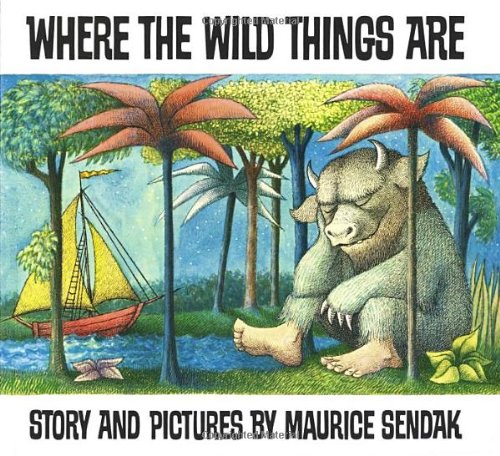
Secretly (oops) I don't think the Elephant and Piggie books are THAT great. I didn't think any of the three from this year were as good as We Are In a Book (also read for the first time tonight) or I Will Surprise My Friend (which I read with surprise and delight during my first year of ALA-awards-fandom), but none of them strike me as great literature. But that MAY have been influenced, tonight, by the fact that I reread Where the Wild Things Are first. In a recent discussion on Heavy Medal, I suggested delicately that it is not the text that makes WTWTA a perennially best-loved classic. I still feel that way (see "marriage is the foundation of our society" or whatever it was I was talking about above), and I think most adults remember the pictures and not the text. But the text is GREAT. I read it three times in a row. I was blown away. That is good stuff. The Elephant and Piggie books paled in comparison. Especially the ice cream one, which seemed overly didactic, and very like the filmstrips we used to watch in first grade that were supposed to teach us social skills but clearly had no effect on most of my generation. (I read a blog post or an article or something recently about those film strips and the theme song I've never forgotten, "The most important person in the whole wide world is you!" The author pointed out that this is not something first graders need to be taught.)

I also picked up No Passengers Beyond This Point by Gennifer Choldenko, which is one of my personal Newbery picks. I read it long ago so haven't been able to defend it well. I flipped through the first chapter and was immediately sucked in. The first chapter alone SCREAMS Newbery quality to me. It is everything that we want all these other novels we're discussing to be.

But I still have not gotten to the extraordinary reading experience.

I picked up Wonderstruck, and also happened to see Drawing From Memory by Allen Say, a book I have seen mentioned in passing as an unlikely Newbery contender because of too much dependence on illustrations. I hadn't bothered putting a hold on it because it wasn't getting any airtime. (Why is it accepted that we can toss away books for older kids because the illustrations are too important, but if we imply this about easy readers and picture books, we are being closed-minded? Hmm?)

After a few pages of Drawing From Memory, I gasped. After I finished half the book, I stopped and texted my brother-in-law and told him to put it on hold immediately. By the end, I'd held back tears twice.

I got up and returned Wonderstruck to the shelf, unread, and went home, so that nothing would interfere with thinking about Drawing From Memory, hopefully ever again.

This is a book that will be enjoyed equally by my seven-year-old niece and her father (they are both Japanophiles; the book takes place in Japan) and my mother. Think of that, three generations of moved, delighted readers at once.

Extraordinary.

Friday, December 4, 2009

Read This Now: Lips Touch: Three Times


I was going to write this whole post about "When is a book too old for the Newbery?". I still might, because I think that's an interesting and often misunderstood question. But this book has been living in me so thoroughly over the last few days that it's asking for a post of its own. You know how occasionally you can love a book so much that you feel lonely for it after you're done reading? It's almost like being homesick.

There is a certain kind of girl the goblins crave. You could walk across a high school campus and point them out: not her, not her, her. The pert, lovely ones with butterfly tattoos in secret places, sitting on their boyfriends' laps? No, not them. The girls watching the lovely ones sitting on their boyfriends' laps? Yes.

Them.


The goblins want girls who dream so hard about being pretty their yearning leaves a palpable trail, a scent goblins can follow like sharks on a soft bloom of blood. The girls with hungry eyes who pray each night to wake up as someone else. Urgent, unkissed, wishful girls.


Are you aching with the wonderfulness of that? Shivers went down my spine the first time I read it. Shivers went down my spine just now, retyping it.

Lips Touch: Three Times is a made up of three novellas, all of which involve a fateful kiss of some kind. I think it's being classified as fantasy, and I was about to say "it's so not", but then I thought over the characters in the stories: goblins. Demons. Immortal shapeshifters. Okay, I accept that this is fantasy, but to me it didn't feel like such; the characters (the main characters are basically mortal) are so very real, and while there are some fantasy elements to the settings, they're pretty much in the real world, too. While I was reading the book everything seemed perfectly plausible, even natural.

"Goblin Market" is the story quoted above, and it's about a modern teenager. It's one of those "if Twilight was actually good" kinds of stories. "Spicy Little Curses Such as These" is set in colonial India, like if Frances Hodgson Burnett had written fantasy, or if LM Montgomery had written fantasy AND stories set in colonial India. "Hatchling" is set in modern London and medieval eastern Europe (and I haven't yet found the right "it's like" for it).

These are gorgeous stories, pulse-beatingly romantic at times, just a little terrifying at other times. Sleeping Beauty curses, children's lives bargained for in hell, ghosts walking clockwise around people for protection, one-eyed birds spying for the immortal queen--I think all the mythology in this book has its basis in real mythology and religion, which is probably what gives one the shock of recognition while reading it; but it's used in new, creative, delicious ways.

Each story has several pages of illustration at the beginning, done by the author's husband. They illustrate events that happen before the story starts; events sketched out within the story. The art is, I would say, sort of a Pre-Raphaelite-meets-manga style, but I don't really know what I'm talking about there. I think the illustrations are going to be very, very appealing to most teenagers, but I think they will make many adults think this isn't the book for them. I'm going to assure you now that it IS.

My interest in this book was piqued by discussion on the Heavy Medal blog--I hadn't considered reading it before, because I thought it would be too high-fantasy for me. It was discussed there in the context of whether it was suitable for the Newbery or too mature. Packaged differently, this would totally be a Newbery contender, and we aren't supposed to look at packaging. But. More on that to come later, probably.

Friday, November 20, 2009

A Season of Gifts and Racism: one more round


There's been tons and tons and tons of discussion about whether Richard Peck's newest book, A Season of Gifts, is racially insensitive. (I know many of you have heard a lot about this, but since I've discovered that a lot of my readers are not regularly blog people and -- gasp! -- don't know about every blog controversy that comes along, a summary: this book takes place in the 1950s; there's a new Methodist preacher in town who's having trouble getting people to come to his church; to drum up publicity, his neighbor Grandma Dowdel pretends to have found the skeleton of an "Indian princess" in her garden and gets the preacher to stage a Christian burial with accompanying media frenzy.)

Let's get one thing straight: yeah, the bones are fake. There's no doubt about it. Only a "but the bones are fake!" defense doesn't wash with me. I'm also not going to say it doesn't make a difference that the bones were fake. The difference is just that it would be WORSE if the bones were real.

Yes, Jonathan Hunt et al, I get that Richard Peck was making fun of white people and their obsession with all things "Native American". But digging up American Indian bones and re-burying them in white Christian cemeteries?

Dude. That's not something to joke about*. It's disrespectful to use something like that as a way to make this mild sort of point, especially in a book that is not ALL about the white obsession with Indian mysticism, because come on, it's not like the white people don't come out on top in this book. They're a little silly in their reaction to the "Kickapoo princess", but they're also down-home good people.

Okay, but what surprises me: in all of the discussions of this book I've read, I can't remember anyone mentioning the part where Richard Peck makes an effort to show that he knows this might come off as being disrespectful. Because the sermon the minister gives is all about how great the Indians who used to live on that land were. Yes, Debbie Reese, I'm using "used to" and "were" on purpose, because that's how they're presented here. "The stewards of this land that now we till" and "How lightly her people lived here/In the seasons' ebb and flow;/May we leave this land as lovely/When it's our own time to go."

He tries, Richard Peck does. He knows that American Indians are more than mascots and "princesses" and headdresses. But this sermon--it's nice. It could be worse. The insensitivity of the book would be worse if it were left out altogether. But what it does is make the people of the town, and the Caucasian reader, feel good. It's okay that the local Indians are gone; they lived a good life and now it's our turn. It was their "time to go".

When, you know, it actually wasn't.

Now, when I first heard about this issue on Roger Sutton's blog, I commented "oops, there goes A Season of Gifts's Newbery nod". But now that I've read it, I don't think this book is Newbery-quality, anyway. It's well-written stylistically, because Richard Peck is a writing master, but the plot and characters are most thin. I don't think it's distinguished or that it adds anything special either to this trilogy (the first two books are excellent; one is a Newbery Honor and the other a Newbery) or to children's literature.

*Always allowing that I could find a joke about this really, really funny if it were done well and made an important point.

Wednesday, October 21, 2009

Newbery Project Revisited

It's been just over a year since I finished reading all the Newbery winners, something I only thought about after I was able to put my Newbery skillz to work recently and call out Peter of Collecting Children's Books (which I referred to this weekend as, I think, "the best blog in the world" or similar), who graciously posted all about it.

Recently I said to Jen Robinson "I'm just really invested in the Newbery," and she responded "I can see that," possibly with a little "hello, Ms. Crazypants" in her eyes.

If I was formal about this kind of thing, I would start a Newbery Challenge and try to convince bloggers to read one Newbery they think they have zero interest in. Or to pick the decade of which they've read the fewest books (probably the 20s or 30s for almost everyone) and read one from there. Or to read the book published the year they were born, or the year their mothers were twelve. (The Westing Game and Amos Fortune: Free Man for me, respectively, which is very funny--of all the books on the list, I put The Westing Game at the top and Amos Fortune at the bottom.)

Every once in a while I revisit the idea of reading all the Newbery Honors, too. I've always avoided that for two reasons--one, I am not a compulsive person in the slightest, and two, a lot of the Honors sound really boring. But compared to most people, I have very little knowledge of most of the Honor books. (Um... when I say "most people", I mean... people with specialized children's literature knowledge. YOU know.) I did have an idea for a series of posts that deal with the winner and all the honors for one particular year; in fact, I finished all my reading for 1953, and if I ever post that year, I'll be soliciting for other year suggestions.

But for now, I'm going to do a decade-by-decade suggestion list. You could take it as a challenge, if you wanted.

1920s: Best read: The Trumpeter of Krakow; interesting setting, characters, and easy-to-enjoy plot. Most important read: The Story of Mankind. I think you really have to know this book.

1930s: Best read: Hitty, Her First Hundred Years, a delightful story of adventure. Most important read: probably Caddie Woodlawn is the one with the most cultural resonance, though I found it unremarkable.

1940s: Best read: The 21 Balloons. This is really the book I wish everyone would read (especially if you like food). Most important read: depending on why you read, maybe The Matchlock Gun. It's easy for me to write off most of the racist books on the Newbery list, because most of them aren't very good. The Matchlock Gun is VERY good. It's a good (and safely in the past) point of reference for discussion about cultural insensitivity vs. distinguished writing.

1950s: Best read: Oh, The Witch of Blackbird Pond. I was talking with a writer who isn't familiar with most of the Newbery books, and she was asking if I agree that most of them aren't very appealing to children. "Like, The Witch of Blackbird Pond, do you really think that's a great book?" she asked. "It's in my top five," I said enthusiastically. She hadn't read the book, had just heard something about it. I loved it when I was a kid and love it more now. Ladies and gentlemen, THAT is a great work of literature. Most important read (other than that): Secret of the Andes. Depending on who you are, you'll read it and see how horribly wrong committee discussions can go (that's me), or you'll read it and come off brilliantly when you're the one person in the group arguing that the right book won that year.

1960s: Best read: From the Mixed-Up Files of Mrs. Basil E. Frankweiler, but you've already read THAT. Most important read: probably the same. If you look at the list of winners, this book seems to usher in a new modern era of children's books; most everything before could be called somewhat old-fashioned, even, in some ways, A Wrinkle in Time. This book has an immediacy and modernity and envelope-pushing quality that seems important in Newbery history.

1970s: Best read: Well, The Westing Game, of course. Most important read: Roll of Thunder, Hear My Cry, I think, which is so central to discussions about period-appropriate offensive language. Incidentally, in the 1970s, four of the books focused on African American themes, one is about an Alaska Native, and The Westing Game has quite a bit of race-relations conversation, too. It's an interesting decade for the Newberys.

1980s: Decade of my childhood, and none of the winners are thrilling to me, which is maybe why I avoided Newbery winners for so many years. Best read: maybe Lincoln: A Photobiography. (Most of the books are good, just not thrilling.) Most important read: um... Jacob Have I Loved might be the most YA book in the entire list, so maybe that's important.

1990s: I sense another cultural shift here. Perhaps the best read is The Giver, and the most important is Holes, which is generally held up as "both popular and profound".

2000s: Best read: A Year Down Yonder, which is spare and funny and meaningful. Most important read: Too soon to say, but Bud, Not Buddy might be the one it's most important to be conversant with, culturally.

As always, I am delighted to hear any agreement or disagreement or to take any "what did you think of" questions. And I'm nudging you--do it now!--take just one of the books I've listed above and put it on hold at the library. Let me know which one you're choosing and why.

Thursday, August 6, 2009

Surreptitiously Gay: The Westing Game?


All right, this piece was written several months ago, and just brought to my attention today via Worth the Trip, but since as you know The Westing Game is my favorite Newbery, I was intrigued by the question of whether there's a gay subtext. Before I read the piece, I quickly scanned my memory for guesses as to what the blogger might be looking at. Angela's friendship with Sydelle Pulaski (those matching checkered outfits!)? Turtle's tomboyishness? Judge Ford's... Judge Fordness?

It's nothing so straightforward as that, and I think this is really more about one person's response to The Westing Game than anything I'd pick out as being queer. (Really, the most surprising thing to me was the author's comment that some of his students wonder about A Separate Peace, even though "sex and sexuality don't feature" in it. I honestly thought that was what A Separate Peace was about, even if it isn't written explicitly. Isn't it?)

Philip mentions a few other books with queer subtext, or possibly queer subtext, like Harriet the Spy. What other children's books have you considered in this context? Since Betsy-Tacy is the hot topic right now, I'll say that I've never noted the slightest hint of a queer subtext between the two of them, though it's questioned occasionally by fans--but in Carney's House Party, in the Vassar chapters, it's barely even hidden. The Sue Barton nurse books are crawling with it (this is probably not a revelation to any of you by this point, but the author of Sue Barton, Helen Dore Boylston, was Rose Wilder Lane's life partner). The boyfriends in Nancy Drew were never anything but a joke. The first Babysitters Club/Friends Forever book, Everything Changes, practically reads like slash fanfic--and speaking of Ann M. Martin, when I read the final California Diaries book (this series is AMAZING, I'm not kidding) I almost cried because she and her ghostwriters never came right out and said Ducky was gay, although they left enough hints for people in the know. My most recent discovery was A Solitary Blue, which I loved loved loved and thought was very gay. Oh, and for a newer book, I haven't got a doubt about one of the characters in The Green Glass Sea and White Sands, Red Menace.

I could (and do) go on like this for a long time, but any other offerings? Or thoughts on The Westing Game? (By the way, my vote for Newbery-with-most-queer-subtext is probably The Twenty-One Balloons.)

Monday, July 6, 2009

Anticipation

This year, thanks to a Baker & Taylor/YALSA grant and a calendar that puts Annual in July, I am going to the ALA Annual Conference! The stars have aligned to give me not just a great professional experience for a school librarian, but also an opportunity I never imagined as I studied the Newbery Award poster that hung in my elementary school library.

Since it's Wendy who actually read all the Newbery winners, I have promised her a full report from the banquet and will share it here as well. I am very excited, as well, about attending the Printz Award Program. While the Newbery is the award of my childhood, the Printz began when I was an adult working in a bookstore, and the Printz books have been fantastic over the years. This year's winner, Jellicoe Road, is not an easy book, nor can it have been an easy choice for the award, but... WOW.

(I considered also writing a post about Nicholas Kristof's column, but fortunately I can now point you to this response from Lisa Von Drasek at Early Word. "Hoary old favorites" is right. The only thing I will add is that if you did not already know that Kristof grew up in Oregon, the bizarre inclusion of On to Oregon on his list would tip you off. I loved pioneer stories when I was a kid too, Nick, but I don't go around recommending Tree Wagon to kids today.)

Friday, March 27, 2009

Onion John, and the Story Behind the Story

Peter at Collecting Children's Books is always turning up the best bits of information--I've already passed along the Paula Fox/Courtney Love connection to everyone I talk to who could possibly be interested--and today he's got a great post about the history behind Joseph Krumgold's Onion John.

Onion John was one of my favorite Newbery discoveries; I thought it was a very funny and honest exploration of fathers and sons, kind of like It's Like This, Cat (but if you're one of the many people who mysteriously dislikes that title, don't let my comparison turn you off Onion John). I had dreaded reading it, but found it immediately delightful.

Peter mentions that today, when a book is based on a true story, we generally know a lot about it from the beginning; with older books it's harder. I LOVE finding out the stories behind books, even if it's just finding out what inspired the author. But do others find that half the fun is in the exploration and fact-finding? Most of the time, the true story isn't nearly as interesting as the book; or if the book follows the true story too closely, it can be disappointing to discover that the author wasn't as creative as she seemed.

Digging through archives to discover whether a particular magazine cover really existed is great--I spent a splendid afternoon at the Carleton library looking for yearbook photos of the "real" Molly, Tina, and Janet from Tam Lin, and a few mornings finding every scrap of information I could in the archives about the "real" Carney from the Betsy-Tacy books, who spent a miserable year at Carleton before going off to Vassar--but seldom, when the hunt is over, am I left with anything that really enriches the fiction. And sometimes when you find a true story, you wish you hadn't--I never reread Beverly Cleary's The Luckiest Girl now without remembering that Cleary wrote in her memoir that the family hadn't invited her back for a second year in California.

Saturday, February 21, 2009

Newbery Roundup 2009

I actually finished my last book of this year's Newbery list a few days ago, but I've been reluctant to write up the roundup because I wasn't wildly enthusiastic about one of the books. Now I understand the rest of you book bloggers better. When I started this I vowed to myself that I would review both books I liked and books I didn't like; I never know whether to trust a reviewer who's always positive, and anyway I like reading thoughtful negative reviews as much as (maybe more than) positive ones. But it just feels WRONG, doesn't it? I blithely post negative reviews on Goodreads--I think there's sort of an illusion of privacy there, even though I have more people following my reviews there than I do here. Or maybe it feels all right because I know that even though I'm posting a bad review there, the author or lover-of-that-book can find a dozen stellar reviews with a mere click.

WINNER: The Graveyard Book (Neil Gaiman)

I was really trying to read every possible book that might win the Newbery, but I didn't get to this one, which I thought had some pleasing mild irony. The public library system in my city is troubled, it takes forever to get new books in, and this started life with a lot of holds on it. After it won, I gave in and bought a copy, as a souvenir of my year of Newbery reading. (I almost never buy books I haven't read before.) Yes, I thought it was terrific--funny and scary and complex; squarely in the Newbery age range, which was pleasing. The structure and magical realism reminded me of Mary Poppins. It won't bounce anything off my Newbery top five, and I can't really say whether I would have chosen it over my own top Newbery pick, The Porcupine Year, but I can see well why it was chosen. My sister Laurie's thoughts are here, and don't miss Monica Edinger's New York Times review.

I thought about updating the Newbery Statistics, but I think I'll leave that as it is. But the effect of this winner: boy protagonists increase their lead further, historical fiction takes a tiny step back in its domination, male authors gain a point.

Honor: The Underneath (Kathi Appelt)

What I found distinguished here: the poetic and mesmerizing writing, which really gave us something different; the sense of place. I thought the story was a bit muddled, but this is a special book--the kind of thing the Newbery Honor is made for.

Honor: The Surrender Tree (Margarita Engle)

This is the other book I didn't read beforehand, but I found it astonishing. This is a powerful book, a fascinating exploration of Cuba's history. Unlike most novels-in-verse I've read, each passage in this book is a whole, complete poem in itself. It doesn't matter if you're not that interested in Cuban history; after reading this you will be. The Spanish-American War suddenly made sense to me, and it makes you think about occupying forces in general. I might have been tempted to vote for this for the gold medal.

Honor: After Tupac and D Foster (Jacqueline Woodson)

I enjoyed this, but it was really the other participants in the Oakland Mock Newbery who pointed out the distinguished features to me--a strong voice and, in a very different way from The Underneath, the sense of place. Previous thoughts here.

Honor: Savvy (Ingrid Law)

Savvy has a fast-paced, of-the-moment plot, and possibly the best first line of the year: "When my brother Fish turned thirteen, we moved to the deepest part of inland because of the hurricane and, of course, the fact that he'd caused it." A movie is in the works for 2011.


I love that there's such a mix of book types on this list (and was surprised to see a blogger claim that except for The Graveyard Book, they're all girl books again. For one thing, except for the winner? That doesn't really work. For another, neither The Underneath nor The Surrender Tree are "girl books". And for yet another, "again"? Except for 2007, there's just... no way). Thanks to the committee.

Sunday, February 8, 2009

Best Book Club Cheat Ever

I can't believe I didn't already know this, but apparently, the first Newbery winner--The Story of Mankind by Hendrik Van Loon, published 1921--was made into a movie featuring many of your favorite people. (Hedy Lamarr! Vincent Price! Peter Lorre! The Marx Brothers! Dennis Hopper!)

The best part? The Story of Mankind is the longest Newbery winner out there; in its original edition it had around 500 pages, I think.

Running time for the movie? 100 MINUTES.

Monday, February 2, 2009

Want to Feel Inadequate?

If you sometimes start to feel like "I've really accomplished too much for someone my age", check out Peter's list of how old authors were when they won the Newbery.

Unfortunately, it looks like I've just missed my chance to say "In your FACE, Elizabeth Enright! I won the Newbery younger than you did."

Also, can I say it doesn't surprise me at all that the writer of Miss Hickory was an elderly lady? If you told me her limbs were twig-like, that wouldn't surprise me either.

Hmm... should probably start some sort of Internet campaign, complaining that older authors are underrepresented among Newbery winners.

Saturday, January 31, 2009

The Graveyard Book by Neil Gaiman

"Remember that part in The Graveyard Book..." Two people in my family read The Graveyard Book earlier this month, and the third person quickly learned that a reference to "Jack" meant a Very Bad Man. We've been talking about The Graveyard Book. In serious terms--"The Graveyard Book brings up my worst nightmare as a mother--the parents murdered and their child in danger," I shuddered. In wistful terms-- "I wish I could have that knife that stayed sharp for 10,000 years," Matthew sighed as he chopped an onion. In playful terms--"Jack Frost is going to get you!" threatened Iris.

The Graveyard Book is a book that readers will think about, and talk about. I have read only one other book by Neil Gaiman, Coraline, and years later I still think about it. Last Sunday, the day before The Graveyard Book won the Newbery Award, a friend of mine pressed her copy of Stardust into my hand. She had read it months before and was still thinking about it. That's one of Gaiman's gifts, and why adults, teenagers, and children will be reading and thinking about The Graveyard Book for many years to come.

Where you can listen to The Graveyard Book: Neil Gaiman Reads
My favorite character in The Graveyard Book: Silas
Who HAS to read The Graveyard Book: fans of Buffy the Vampire Slayer
What I will read next: The Jungle Book

Thursday, January 29, 2009

After Tupac and D Foster, Homophobia, and Newbery Reactions

I first read After Tupac and D Foster (Jacqueline Woodson) last fall, when Heavy Medal chose it as one of the shortlist books for the Mock Newbery. I liked it a lot, even if I didn't think it was perfect. But right away I shut my mind to the idea of it winning the Newbery.

I had various reasons to give; I remember saying, during the mock-discussion, "I would never be bringing this up if we weren't analyzing this so closely, because it's a great book, but--" and mentioning some point about the text and plot development. Eventually I even voted for it to receive one of the mock-honors and was pleased when it was chosen.

But a couple of days before the real awards were announced, I recognized the real reason I didn't want to consider After Tupac as a possible Newbery winner. I didn't want to deal with the aftermath if it won.

I'm really enjoying reading discussion about the awards on various blogs, including dissent--is The Graveyard Book a fully-developed novel? what was wrong with Chains? how could they ignore Wabi Sabi?-- even the (to me very odd) suggestion that the non-standard English in After Tupac keeps it from being literary enough. (...would the same argument apply to the non-standard English in, say, Huckleberry Finn?)

But homophobia is hard for me to shake off sometimes. And I really didn't like the idea of reading blogs and even newspaper articles, the day after After Tupac might have won the Newbery, and reading veiled and not-so-veiled opinions about the Newbery committee "pushing an agenda" and choosing a book that "is not right for the children in my library" and that "I couldn't possibly use in my classroom".

After Tupac and D Foster is, at its center, about the friendship of three girls in the 1990s who love Tupac Shakur's music. One of the girls has a brother who's gay, and also in prison. There's a lengthy scene in the book where two of the girls and the man's family visit him there. A sample:

"What's the first thing you gonna do when you get home, Tash?" I asked.


"Girl, you know I'm gonna get my hair twisted, make myself a cute drink and get myself over to the river and see my people!"


The river was where all the gay guys hung out. Sometimes Tash took me and Neeka with him when he went to hang out with his "girls". I loved going because all the other queens always made such a fuss over us, telling us how beautiful we were and how we'd grow up to give somebody "fever" one day.


"Some of the children came to see me last week and they were like Girl, how is you living up in here?!"


I laughed, trying to imagine Tash's queenie friends looking around the gray walls and dirty floor and barred-up windows.


(After Tupac and D Foster, Jacqueline Woodson, p 104)

So let's pause for a sec and talk about voice, because voice is what really makes this novel stand out--what makes it, in my opinion, "also truly distinguished". The narrator's voice is so true and believable throughout the book that it's almost hard to believe she isn't a real person. And I found the voices of all the supporting characters equally impressive--the above is a great example. Doesn't the narrator's response sound exactly like what a comfortable 12-year-old would be thinking? Doesn't Tash feel like a real person that you could walk down to the prison or the river and meet yourself? Can't you see all his friends visiting the prison and looking around the visitation room in horror? And just mentioning "the river" adds another element to how this novel deals with place. Even though Tash is lucky in his family and friends, he still has his own place with his own people. He doesn't belong totally in the neighborhood, the way the girls do.

It doesn't really get more explicit than this. There are some veiled references to the dangers of being obviously gay in prison that I think will probably go over the heads of most kids (but if they don't, I don't have a problem with that, either). But there's certainly no chance of missing that Tash is gay, and his family and friends accept him. And I knew that would be too much for some people.

A lot of people don't like it when the term "homophobia" is applied to them, because, they say, they aren't "afraid" of gay people. But they do show fear--the fear of their kids "becoming" gay, usually, and a fear of having to talk with their kids about what "gay" is and whether it's right or wrong or neither. These are the people who are thinking--for subject matter, anyway--that After Tupac shouldn't have been given a Newbery honor.

I like talking with people about gay issues, usually, whether they agree with me or not. Often I have to hold back laughter when I'm talking with (or reading the blog posts of) people who are well-meaning but extremely naive, or people who have totally ridiculous reasons for their anti-gay beliefs. But I think this year... maybe I've had enough of homophobia. I live in California.

So I didn't want to think about what might happen if After Tupac and D Foster (a book that I would say is appropriate, reading and interest-level wise, for kids about 11 and up) won the Newbery. There's almost never as much discussion about the Honor books (which is too bad, of course). So I'm only hearing the occasional comment about After Tupac being "really for older readers", or, as one blogger put it,
this is most definitely a young adult novel, and deals with gangs, violence, prison, and mentiones homosexual prison affairs. So unless you want to be explaining that . . .

But since this isn't all about my personal comfort, I'm delighted to think of the range of children, parents, and teachers who will be reading this book now and identifying with these girls who embrace their brother's gayness. To my knowledge, this is the first Newbery book (winner or honor) that clearly contains LGBTQ content. (I haven't read that many of the recent honors, so if anyone knows of others, please tell me. I think A Solitary Blue has gay themes, but it's... well, not explicit, but I want to believe it so much that I'm NOT going to write Cynthia Voigt and ask her, because if it isn't, I don't want to know.) Thanks, committee, and thanks, Jacqueline Woodson.

Tuesday, January 27, 2009

A funny article from the AP

Let's just start off with the assumption that I am always annoyed when the Anita Silvey article is cited as a source to show that the Newbery hasn't been good for years and everyone knows it--because a. not really a reliable source, since it was more of an opinion piece than a sourced article, and b. the Newbery has had books lots of people love and books that had smaller audiences throughout its history as well as throughout the last few years. (One of my favorite things about the Silvey piece is how she mentions The Story of Mankind as an example of a popular book.)

All the articles that appear today are likely to take one perspective, and because I'm feeling generous, I'm going to say it's because they need a hook, and this year's hook is going to be "Neil Gaiman is famous and popular! Weird!"--not because all the journalists are cruddy and rude.

But this article from the AP is a really funny one.

--apparently, Good Masters! Sweet Ladies! is too "difficult" (first I've heard of it; I bought it for my five-year-old niece, even if not necessarily for her to read to herself)

--and The Higher Power of Lucky is too "disturbing". What? Maybe someone thinks children will be so disturbed by the word "scrotum" that they'll... run off into the desert? There are quite a few objections to Lucky as a distinguished book (I can't wait to find out in the sequel how Brigitte is going to make a go of a restaurant in that impoverished town that no one visits), but "disturbing" is one I've never heard.

But the killer is the last paragraph: "Gaiman, 48, has three children. Two have grown and moved away."

Since most of the article is talking about whether The Graveyard Book is horror, or too disturbing, the emphasis on "grown and moved away" makes it sound like... well... SOMETHING SUSPICIOUS happened. I mean, did NOT happen, and we shouldn't think anything else.

Monday, January 26, 2009

sheesh

Um, according to an article (that contains a lot of iffy grammar, by the way--I think they should be embarrassed) in the School Library Journal Online, when librarians at the ALA conference heard that Neil Gaiman's twitter post read “F---!!!! I won the F---ING NEWBERY THIS IS SO F---ING AWESOME. I thank you", "some librarians were already expressing disappointment, saying such language was inappropriate".

...maybe they ARE out of touch.

Hmm. Some of the grammar in the article has already been corrected in the five minutes since I first read it. I mean, that's good, but... weird. Also makes it harder for me to be snippy. Am glad I didn't mention the bad grammar in my already-snippy comment about the first line (about the Newbery finally ending its "slump").

ETA: link. The article has been edited a few times already from when I posted, which is... interesting.

More coherent thoughts

During the live feed for the awards announcements, I was blogging here, chatting with my sister, and refreshing the livejournal of a friend who was also blogging minute-by-minute... as well as trying to keep track of time so I wasn't late for jury duty. The Newbery was announced just in time (I live only six blocks from the courthouse), and I'm here now, sitting in the courthouse hallway because all the jury waiting rooms are filled to bursting. I'm happy to see so many people reading. Probably no one else knows how cool I am for having a copy of Tender Morsels right here (I have about fifty pages left).

People who are very happy right now:

*Me. I'm thrilled with all the winners. Even though The Porcupine Year didn't take anything, I don't have any feelings of "how could THAT win when Porcupine didn't"? There's one book each on the Printz and Newbery lists that I didn't love, but I did think they were both good, so it doesn't matter. And I didn't really take After Tupac and D Foster seriously as a Newbery contender--I think I'm going to have a whole post about that later--but I did think it was very good. Is Jacqueline Woodson the Susan Lucci of the Newbery?

I'm tickled that I called We Are the Ship for the Sibert award (non-fiction), and glad that What to Do About Alice was honored there, too; I still think it'd be better for the Caldecott, but an award is an award. And The House in the Night was a terrific Caldecott choice.

I find that my greatest happiness is about the Printz honor for Nation. It is... oh, I don't know. I can't explain, but this is such a great example of how a book can be great YA without being violent or shocking or sexual. I don't necessarily object to those things--Tender Morsels is all of them--but I want people to know there's something else.

*Cheryl Klein, a Carleton classmate (can I say classmate? she was a year ahead of me, but "schoolmate" sounds funny), who edited Moribito: Guardian of the Spirit by Nahoko Uehashi, which won the Batchelder award for best book translated from another language, AND edited A Curse As Dark As Gold by Elizabeth C. Bunce, which won the Morris award for best YA novel by a first-time author. I'd only read a couple of the Morris nominees (love having a nominee list), but I'd thought to myself that the Morris is MADE for books like Curse.

*Nina Lindsay, who loved The Graveyard Book, but was sure it wouldn't be eligible (one of the chapters was previously published).

*Neil Gaiman.

Reactions As They Happen

6:42 I really hope this livestreaming thing is going to work.
6:43 Music from the livefeed! Possibly the jury people will appreciate it if I brush my teeth.
6:44 Oh, I liked the music. Oh, well.
6:45 Message from Twitter, nothing from livefeed.
6:46 YES! Here we go.
6:52 Haven't heard of any of the Alex Award books, but I've been busy.
6:53 Am amused at how much librarians sound like high schoolers and/or concertgoers.
6:55 Piano Starts Here for the Schneider! I've actually read that! I liked it.
6:56 Waiting For Normal for the next Schneider! What a great choice. Oh, I thought it would be because of the mother's mental illness, but it's her learning disability. I'll probably write about that in a future post.
6:57 Haven't read the Schneider teen book, but I'm feeling very successful so far.
7:00 Twitter is ahead of the conference; does the audience know? We could start hearing preliminary squeals.
7:00 CSK Honor for We Are The Ship. Yay, but WHAT is going to win?
7:01 Haven't read CSK winner for illustration, The Blacker the Berry.
7:02 Woohoo! We Are the Ship wins the author CSK. IT'S SO GOOD.
7:09 YES! A Curse Dark As Gold was my hope for the Morris award.
7:10 YAY Nation!
7:11 YAY Tender Morsels!
7:12 Have heard great things about Jellicoe Road! Altogether pleased.
7:19 I don't have much time left. Luckily, I only live six blocks from the courthouse.
7:24 Sibert honors! First one sounds good, Alice is great of course
7:25 YAYYYYY! Also, feeling smart!
7:26 I haven't heard of the LIW winner... oh, an illustrator, that's why.
7:33 Caldecott!
7:34 The House in the Night! Not my choice, but I'm very happy! Great art.
7:35 EEEEEEK I can't stand it
7:35 Underneath, YAY!
7:35 The Surrender Tree, one I haven't read!
7:36 Savvy, not my choice, but one I called!
7:36 Tupac, Congrats to Nina for calling it!
7:36 The Graveyard Book! Was eligible! YAY COMMITTEE! WE LOVE YOU!

...and I'm off to jury duty.

Anticipation

I have the live feed for the ALA awards open; I have the Twitter screen open just in case. I'm all ready to go to jury duty as soon as the awards are announced. But first, just in CASE the Newbery and Printz aren't things I've read, I also have the library's website open so I can be first to request the books.

I wonder how much more productive I'd be if I always got ready for the day before reading all my favorite blogs.

Do read the anticipation posts on Heavy Medal, starting here, and reading at least the two after. Sharon mentions that she's been working on the Rainbow List of the year's best LGBTQ books for kids--how crazy is it that there are enough published now to warrant a yearly list? Dude, when I was a teenager we had to be happy with reading Annie On My Mind in a seldom-visited corner of the school library.

Nina mentions in another post about the list of Notable Books. Thinking about this list is a relief to me--all those books that I really like, but don't think are good enough for the Newbery--they can still be Notable Books.

Twenty minutes! I have to confess that I'm hoping I do get on a jury; otherwise I'll have to come up with a new hobby all on my own.